
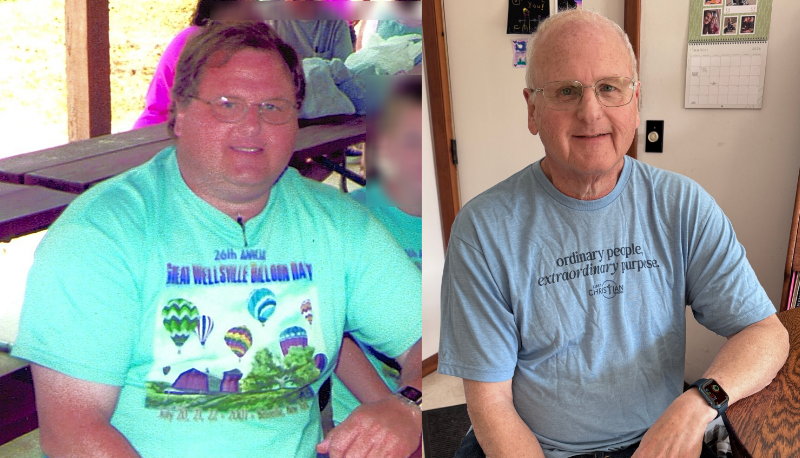
Part 4 of 4
I am not a medical professional, but I have found some relatively new to me information through my own research. Please do not consider this medical advice. Always consult with your doctor.
In the previous three articles, I talked about what I have learned about myself and diabetes. For me, and I believe many others, it is more of a lifestyle disease than a true medical condition. I say that because I can control what I eat and when. This is NOT true for all diseases, conditions, and forms of diabetes.
By the time you read this, it will be about four months since I made these discoveries and began altering my lifestyle.
The table summarizes from 2002 to 2026. Most of these changes have been made since Christmas 2025. Note, they are not in chronological order.
| Item | August 2002 | December 2025 | April 2026 |
| Approximate Weight | 292 Pounds | 218 Pounds | 198 Pounds |
| A1C Blood Test (Normal<5.4) | High 7.7 in 7/2022 | 7.1 in 8/2025 | 6.1 in 2/20265.4 in 5/2026 Libre App Estimate |
| Exercise | No Intentional Exercise | Hike 2-5x/week | Exercise 30-45 DailyHike 4-6x/week |
| Meals/Snacks/day | 3 Meals / Steady Snacking | 3 Meals / Steady Snacking | 2 Meals/ Occasional snack of Protein or 85% Dark Chocolate |
| Primary Food | Sweets, breads, pasta, meat, potatoes, rice, packaged foods | Sweets, breads, pasta, meat, potatoes, rice, packaged foods | Proteins, fiber, fats, minimal breads. |
| Average Number of Dangerous Sugar Spikes / Day | 1-3 Daily.Greater than 180 mg/dL | 1-3 Daily.Greater than 180 mg/dL | 3 Times Total Since January 1, 2026.Greater than 180 mg/dL |
| Medications | Metformin 500 mg | Metformin 2000 mg(Max Dose)
Ozempic Weekly 2 mg (Max Dose) |
Metformin 1000 mg(Goal 0 mg by 2027)
Ozempic end 4/2026 |
It's All Mental
My weight loss journey has involved repeated periods of discipline and little self-control. I knew I was damaging my body. It did not seem real. It happened slowly. While I knew I needed to lose weight and get diabetes under control, I did not want to. This led to the weight-loss roller coaster.
As stated, for me, this is a lifestyle issue, not a disease issue. I can control how much I eat and when. I can control how much I exercise and when.
I used to look at dieting as temporary, and that was the problem. I’ll just do this stuff for a while, then I can binge again. I had to come to grips with the need to change the way I live.
Consequences
Diabetes damages every organ in your body unless you manage your blood sugar well. In the most severe cases, you can lose your feet, eyesight, and kidneys. Your risk of heart disease and stroke is significantly higher. Damaged blood vessels in your brain can cause Alzheimer’s and other forms of dementia. And there is more.
In my opinion, the best way to avoid all of that is to examine and change your lifestyle. But you must embrace this change in order to succeed. You have to want it.
The Results
Overall, I am pleased with the results so far. The weight loss has been slower than I had hoped, but steady. My A1C results are moving in the right direction.
Look at the two graphs from my Libre 3 Plus glucose monitor. Anything in or close to the white area is bad.
The Green area below is the TARGET RANGE for diabetics. The typical range for non-diabetics is from 70 – 140 mg/dL. I am usually below 150 mg/dL. I sometimes spike above 150 but so far I have been rarely above 180 mg/dL.
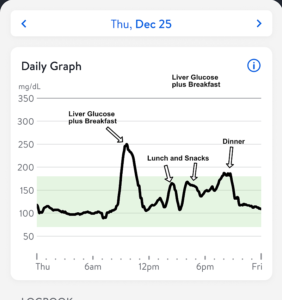

August 2002 or 2003
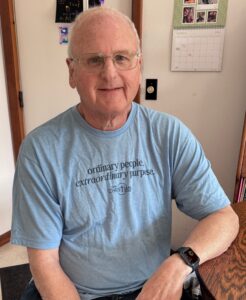
March 2026
This is the short version of the article. If you would like to learn more about the tools I use to manage my diet, exercise, and blood sugar, visit GeraldThompson.com to read the full article.
My goal with this series of articles about my diabetic journey is to encourage you to consider your lifestyle. If you are prediabetic or diabetic, become your own advocate, get educated, and ask questions. Then ask some more. Don’t assume a brown blotch is tanned skin. There is hope to heal. Do not blindly accept medications as I did as the only solution. Dig deeper into how to best help yourself.
Disclaimer: No medical treatment is being recommended. You should do your own research and consult your doctor to decide how to manage your health.
Tools I use:
HASFit.com and app. This husband-and-wife team offers a wide range of exercise videos for you to follow along with. The wife does an easier version of the exercise while the husband does a harder one. They have monthlong programs for different age groups and fitness levels. I am following their Beginner and Foundation videos, and I find them plenty challenging and exactly what I need to maintain my muscle mass. There is a $50/year subscription for ad-free videos.
Apple watch pairs with my iPhone: The Apple watch keeps track of my exercise time and my overall activity level. It also has free, built-in fall protection. I typically hike by myself. Should I fall and not tell it to stop, it will trigger my phone to call 911 in 90 seconds and send my GPS coordinates.
Secondhand stores such as Goodwill: No need to buy those expensive hand weights and other at-home exercise equipment. I get ninety percent of my exercise equipment from second-hand stores.
Medicare: If you are on Medicare, they often have excellent resources for gym access, exercise, and nutrition. I have consulted with them in the past and received some excellent advice and free exercise equipment.
Libre 3 Plus Continuous Glucose Monitor. Medicare will not supply you with a Continuous Glucose Monitor unless you are on insulin. This is unfortunate because the monitor helps me make decisions. I can see the results of the good and the bad food decisions I have made. I pay for the L3P monitors out of pocket. It was about $160/month when I started. Abbott emailed me a coupon, and since then, it has been about $75/month. Check with your doctor and pharmacy to see what is available for you. You still need a prescription.
However, I have seen ads recently for Lingo and Dexcom Stelo. They do not require a prescription and currently cost more than my $75/mo. Both are higher than $80/month.
Lose It App: I use the Lose It App to keep track of what I eat and to track my weight loss and exercise goals. There are many excellent apps; this is the one I use. When the Lose It App was new, they had a lifetime offer of about $100, and I took advantage of that, so it does not have an annual cost for me. Currently, it is about $40/year or $300 lifetime.
Daily Exercise: I have been hiking 2-3 miles, 2-5 times per week for about 10 years. Now I have added strength training and/or stretching exercises 5-7 days per week for 15-45 minutes. I made these choices for the following reasons:
Convenience. I don’t have to go anywhere or pay for gym memberships. I use an app and hand weights I bought from secondhand stores.
- Weather and schedule prevent me from hiking daily.
- I prefer hiking, but it only works the lower half of my body, not my upper.
- Under the right conditions, your body will hold onto your fat and sacrifice inactive muscle. You lose weight but also strength. Being 67, I wanted to prevent that; you need to exercise all of your muscles. They burn more glucose than most tissues, and you’ll age better.
Meals: I no longer eat three meals a day; now I eat two. The first one is about two hours after I am active. As reported previously, your liver converts liver fat into glucose and dumps what you need to start the day into your bloodstream. I do not want to eat until that sugar (glucose) has been consumed. Then I eat breakfast.
The second meal is between 4:00 and 6:00 P.M. I don’t typically eat after that. The idea is to fast for 12-16 hours. I try not to snack between these two meals. The reason is to give my pancreas a break from producing insulin.
This helps your cells reverse the insulin resistance and increases insulin sensitivity. So instead of dangerously high sugar spikes when you eat, you see a much lower and wider glucose spikes in the safe range.
What have I been eating?
I have tried not to eat any prepackaged, highly processed foods. I focus mainly on proteins, fiber, and beans, as well as raw, frozen, or canned vegetables. Dried meat and nuts are also acceptable.
Breakfast: I eat high-protein, low or no-sugar yogurt with fresh or frozen berries. I used to eat a small to medium banana for potassium to support my heart, but it spiked my glucose to an unhealthy level. One half-cup of strawberries, blackberries, and raspberries that I add to my yogurt has about 1/3 the potassium of a small banana.
I also eat 3-6 ounces of meat. I usually have ham, leftover chicken/ground beef, chili, or similar.
Snack: I try not to snack as I did. Should I snack, I eat something very low in sugar or high in protein For example, I eat a few peanuts. ALDI has 5 packs of 25-gram (about 1-ounce) 85% dark chocolate bars. They contain 3 grams of added sugar and do not spike my blood sugar. But snacking is the exception, not the rule.
Dinner: I usually eat meat and a non-starchy vegetable. Buffalo Chicken wings and chili are favorites, as well as steamed, frozen vegetables. If there is a starchy vegetable like white or sweet potatoes, I limit the amount.
Medications: I have taken Metformin since 2003. I’ve been on Ozempic for 2-3 years and have tried others in between. The doctor kept upping the doses for both medications because they did not seem to help me. Ozempic does not help everybody lose weight. I told my doctor I wanted off of the Ozempic because I was getting good control of my blood sugar. She agreed. We also cut my Metformin in half.
My goal is to continue to eliminate or reduce most of my prescriptions. Metformin is next on my list, as long as I keep my sugar down and keep losing weight. My blood pressure was very good, and I hope to stop that by year's end as well.